


How To Fix Improper Posture for Back and Neck Pain Relief
“Stand up straight!” has been a refrain from parents throughout the ages, but is it really that important? Actually – yes, it is!
Many people assume maintaining proper posture is about appearance: looking tall and confident. In reality, improper posture can cause pain in your neck and upper back and put pressure on your spine, leading to an increased injury risk.
But what exactly is proper posture? It probably won’t surprise you to learn that it’s more complicated than merely standing up straight. Instead, it’s more about finding the right spinal alignment for your body – and that’s something the physical therapists at MedRehab Group can help you with! If you’re struggling with persistent neck or back pain, it may be time to visit us for a postural assessment. We’ll help pinpoint any impairments or imbalances in your spine that might be causing problems and then provide strategies for maintaining your postural alignment throughout the day.
Call us to schedule an appointment for your initial consultation!


Our Patients Get Great Results
“Found MedRehab Group after being in a car accident. The process of coordinating with insurance and scheduling appointments was seamless. Before coming here my injury caused me a lot of pain and interfered with my day to day life, been coming here for treatment for about four months now and have noticed improvement with my injury. They take the time to make a personalized treatment plan as well as explain the reasoning for exercises and practices. Aqsa and her team are patient, professional, and organized. They are kind and good people with expertise level knowledge. Always feel like I’m in good hands here.” – Lisa
Understanding Proper Posture: Movement and Awareness is Key
Let’s get this out of the way first: There’s no universal “ideal posture” that will work for everyone. Even common advice like “stand up straight” isn’t particularly helpful: for one, no one’s spine is ever perfectly straight since it has a natural curve pattern. For another, you don’t spend your entire life standing still.
Rather than aiming for a non-existent “perfect” posture, you want to focus on two things:
- Postural Awareness: People don’t set out to have bad posture. You might start the day telling yourself you’re not going to slouch – but then, as you get busy with other tasks, posture becomes the last thing on your mind. By staying more aware of your posture, you can more easily adapt to the various positions you have to hold throughout the day.
- Avoid Prolonged Postures: Your body wants to move. Holding the same posture for extended periods (even if you’re sitting up straight and have everything in alignment) is still going to cause problems! Rather than aiming for a “perfect” posture, make sure to change your positions throughout the day. Alternate between sitting and standing. Switch positions. Get up and move around. In short – try to stay as active as possible.
Exercise of the Month
ONE LEG BALANCE
Stand upright and lift one foot off the ground without holding onto anything. Keep your arms out or at your sides to help balance. Challenge yourself to hold longer to build ankle and hip strength.
The Relationship Between Posture & Pain
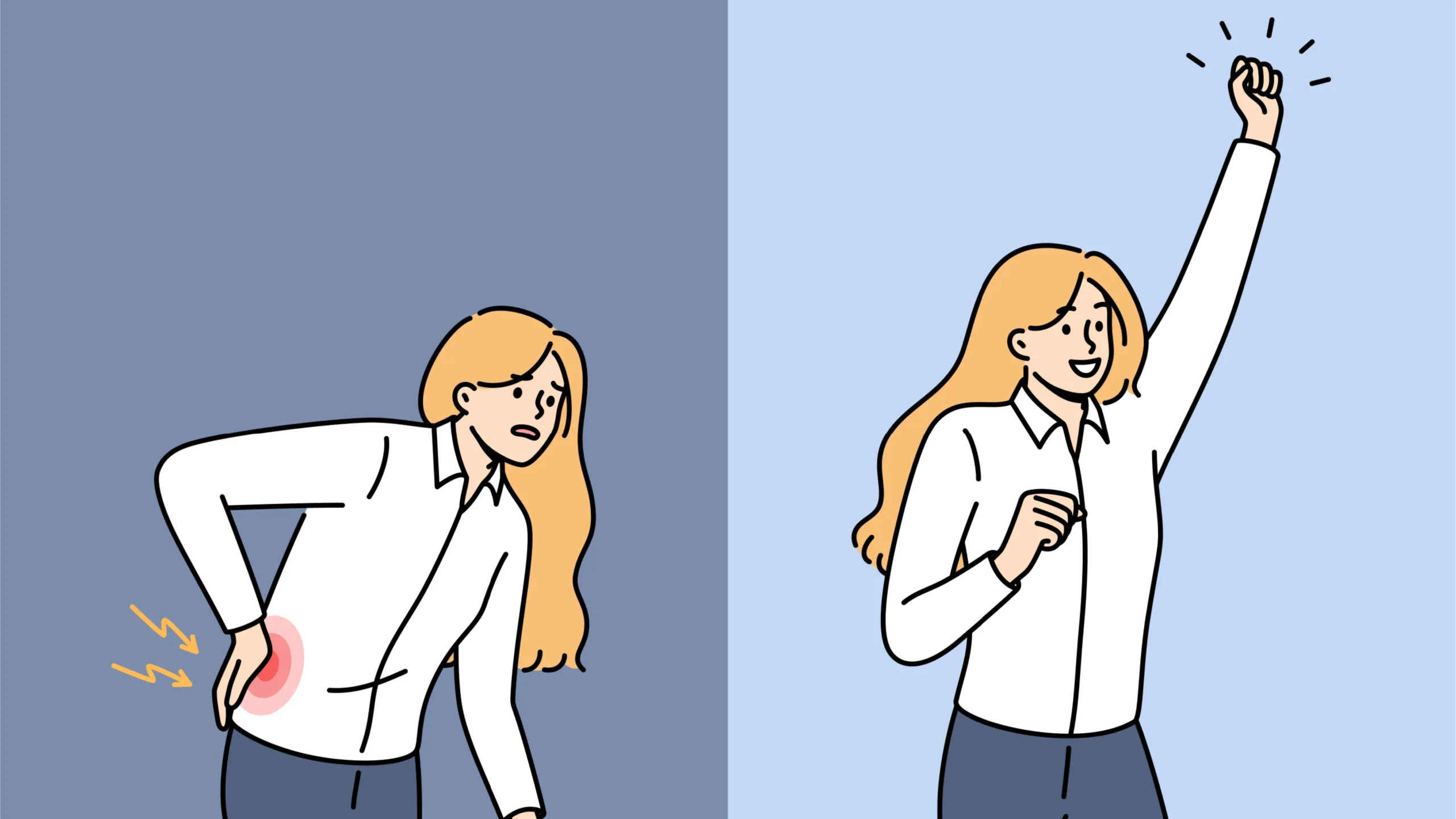
Neck and back pain have several potential causes and contributing factors. Improper posture is often one of them. When you lose your postural awareness and start to slouch, it puts extra strain on the muscles that support your spine, particularly the muscles in your neck and upper back. This can lead to overuse injuries that cause pain or restricted mobility.
Remaining in prolonged postures (particularly sitting) also puts extra strain on your back muscles. When you get up and move around – even if it’s just for a few minutes – you relieve that pressure. Staying active also helps strengthen the muscles of your back and core, which helps prevent common musculoskeletal injuries that can cause pain and dysfunction.
Physical Therapy’s Role in Improving Posture
When you visit us for your appointment, here’s what we’ll do to help you improve your posture and reduce your back and neck pain:
- We start with a comprehensive postural assessment. We’ll take a look at your posture when you’re sitting, standing, and moving, looking for potential areas of dysfunction. We’ll also take a complete health history and might run some additional screens, too, testing for strength, mobility, balance, and more.
- We help with any acute pain. Manual therapy techniques and targeted mobility exercises can help relieve your pain and help you get your body’s function back.
- We help strengthen any weak muscles: Targeted strengthening exercises will help correct any muscular imbalances stemming from improper posture, providing better support and stability to your spine.
- We offer personalized postural corrections: The final piece of the puzzle helps ensure lasting relief. We’ll provide a customized postural improvement plan that speaks to your unique needs and impairments.
Start Improving Your Posture Today!
Fixing improper posture isn’t a one-and-done affair, but a visit to MedRehab Group can help you get started. Call us to schedule your appointment today!
Understanding Fall Risks
As we go through life, staying safe is a top priority, especially as we get older. It’s crucial to recognize the signs of potential fall risks so we can take steps to protect ourselves.
Here are the five most common signs that someone may be at risk of falling:
- Previous Falls: One of the most telling signs is a history of falls. If someone has fallen before, it’s a clear signal that they might fall again. But falls can happen unexpectedly to anyone, so we must stay aware.
- Balance Matters: Another common indicator is trouble with balance. Feeling unsteady or wobbly while walking or standing still can signal an increased risk of falling.
- Walking Aids: Using walking aids, like canes or walkers, is another sign to watch for. While these tools help many people, relying on them can indicate a higher risk of falling, especially if they’re used all the time.
- Medication Complexity: Taking multiple medications, especially those with side effects like dizziness or balance problems, can increase the chances of falling.
- Home Hazards: Living in a cluttered environment, having poor lighting, or encountering obstacles on the floor can significantly increase the likelihood of tripping or falling.
Worried About Your Fall Risk?
Recognizing these signs is the first step toward preventing falls. Seeking the guidance of one of our skilled physical therapists can provide invaluable support. We are experts in evaluating these risk factors and creating personalized plans to improve strength, balance, and overall safety.
So, if you or a loved one notices any of these signs, don’t hesitate to call MedRehab Group today!
Teena | Registered Physiotherapist
Teena is a dedicated and compassionate physiotherapist, licensed and registered with the College of Physiotherapists of Ontario. After earning her Bachelor’s degree in Physiotherapy in India in 2016, she has gained extensive clinical experience both internationally and in Canada, delivering high-quality, evidence-based care to a diverse range of patients.
With a strong foundation in musculoskeletal and geriatric physiotherapy, Teena has developed a keen interest and specialized skills in managing conditions such as arthritis, joint pain, post-surgical rehabilitation, age-related mobility issues, sports injuries, and chronic pain syndromes. Her approach is holistic and patient-centered, focusing not only on treating symptoms but also addressing the root causes of dysfunction and preventing future issues.
Teena is committed to providing optimal care through a blend of manual therapy, therapeutic exercise, and electrotherapy modalities. She believes strongly in the power of movement and education to empower patients, helping them take an active role in their recovery and long-term wellness. She continuously stays up to date with the latest research and advancements in physiotherapy to ensure her clinical practice aligns with current guidelines and best practices.

Recipe of the Month: Rosemary Citrus One Pan Baked Salmon

Ingredients:
- ⅓ cup olive oil
- 1 small orange (2 Tablespoons juice of orange plus thinly sliced orange slices)
- 1 Tablespoon lemon juice
- ½ teaspoon garlic, minced
- ¼ teaspoon orange zest (grated orange peel from orange)
- 2 Tablespoons fresh rosemary, plus extra to garnish (1 tsp dried rosemary may be substituted)
- 2–3 teaspoons honey
- 10–12 ounces sockeye salmon (whole fillet or three 4 ounces fillets)
- Pinch of sea salt
- Optional – thinly sliced orange or lemon
- Optional- 2 cups chopped/sliced veggies of choice (i.e broccoli, asparagus, green beans, etc.)
- Additional seasoning of choice or salt and pepper to taste
Instructions:
- Whisk together the olive oil, orange juice, lemon juice, garlic, orange zest, 2 tablespoons rosemary, and optional honey. Set the mixture aside.
- Grease or oil a large baking dish. Place the salmon in the baking dish, skin side down. Season the salmon with a pinch of salt.
- Preheat the oven to 400 degrees Fahrenheit.
- Brush the orange rosemary on top of the salmon, and place the salmon in the fridge to marinate for 5-10 minutes while the oven preheats.
- After 5-10 minutes, add thin orange slices on top of the salmon (optional), and toss veggies of choice with the reserved marinade or 2 teaspoons of olive oil, lemon juice, or seasoning of choice.
- Place the tossed veggies (if using) around the salmon in the pan.
- Place the baking dish in the oven for 12-15 minutes or until the salmon is no longer opaque in the middle and the vegetables are cooked through.
- Let the salmon rest for 3 minutes before serving.
- Add additional salt and pepper to taste.

Vikramjeet | Chiropractor
Hey everyone! I’m Dr. Vikram Rai, a chiropractor serving Toronto and the Greater Toronto Area, dedicated to helping you move better, feel stronger, and live pain-free. I earned my Doctor of Chiropractic from New York Chiropractic College and hold a Bachelor’s in Honours Health Science from Wilfrid Laurier University. My approach focuses on treating the root cause of pain rather than just the symptoms, using a combination of advanced techniques like Myo-Matrix Release Technique, Functional Integrated Acupuncture, Synergy Performance Taping, and Fascial Abrasion Technique. I currently work with patients from all walks of life, helping them recover, improve mobility, and perform at their best—let’s keep you in motion!
Meet Our Team
Alexandr, Osteopath
Osteopath

Andrew, Acupuncture and Herbal Medicine
Acupuncture and Herbal Medicine
Aqsa, Registered Physiotherapist
Registered Physiotherapist

Archita, Registered Physiotherapist
Registered Physiotherapist

Audrey,Registered Acupuncturist and Traditional Chinese Medicine Practitioner
Registered Acupuncturist

Ben, Chiropodist
Chiropodist
Daniella, Office Manager
Office Manager


Dr. Jamaal Coke, Chiropractor
Chiropractor

El Ana Rhoda, Registered Physiotherapist
Registered Physiotherapist
Jazzlyn, Office Staff
Admin and Reception
Jonathan, Manager
Manager

Li, Acupuncturist and Registered Massage Therapist
Acupuncturist and Registered Massage Therapist

Maria Luiza, Registered Massage Therapist
Registered Massage Therapist
Mohammadrahil,Registered Physiotherapist
Registered Physiotherapist

Neha, Registered Physiotherapist
Registered Physiotherapist

Nishtha Patel, Registered Physiotherapist
Registered Physiotherapist

Noel, Registered Physiotherapist
Registered Physiotherapist

Paula, Director of Operations and Customer Service
Director of Operations and Customer Service

Ritu, Registered Massage Therapist
Registered Massage Therapist

Shu, Registered Massage Therapist
Registered Massage Therapist

Tanvi, Registered Physiotherapist
Registered Physiotherapist

Ying, Registered Massage Therapist and Acupuncturist
Registered Massage Therapist , Acupuncturist

Zena, Office Staff
Office Staff

Alex, Operations Manager
Operations Manager

Sherry Ann, Branch Manager
Branch Manager

Amanda, Manager Training and Development
Manager Training and Development

Kripaliben, Registered Physiotherapist
Registered Physiotherapist

Rhoda, Registered Physiotherapist
Registered Physiotherapist

Jacquelin, Registered Physiotherapist
Registered Physiotherapist

Rochelle, Registered Physiotherapist
Registered Physiotherapist

Rhoda, Registered Physiotherapist
Registered Physiotherapist

Dr. Daniella Astorino, DC, Chiropractor
Chiropractor

Dr. Annamaria De Fina, DC, Chiropractor
Chiropractor

Dr. Alvin De Leon, DC, Chiropractor
Chiropractor – New German Medicine Therapy
Dr. Steve Cho, DC, Chiropractor
Chiropractor

Dr. Rahim Habib, Naturopath
Doctor of Naturopath

Babak, Acupuncturist & holistic and alternative health care provider
Acupuncturist & holistic and alternative health care provider

Olivia, Acupuncturist
Acupuncturist
Dong, Registered Massage Therapist
Registered Massage Therapist
Lin, Registered Massage Therapist
Registered Massage Therapist

Preet, Registered Massage Therapist
Registered Massage Therapist

Judith, Registered Massage Therapist
Registered Massage Therapist

Stephan, Registered Massage Therapist
Registered Massage Therapist

Christina, Registered Massage Therapist
Registered Massage Therapist

Alla, Registered Massage Therapist
Registered Massage Therapist
Larissa, Registered Massage Therapist
Registered Massage Therapist

Craig, Registered Massage Therapist
Registered Massage Therapist

Millora (Mildred), Registered Massage Therapist
Registered Massage Therapist

Sharon (Ting), Registered Massage Therapist
Registered Massage Therapist
Guido, Physiotherapist Assistant and Athletic Therapist
Athletic Therapist and Athletic Therapist

Elizabeth, Office Staff
Office Staff

Anicia, Office Manager
Office Manager

Rachelle, Physiotherapist Assistant /Admin
Physiotherapist Assistant /admin

Varinder, Branch Manager
Branch Manager

Catherine, Office Staff
Office Staff

Rami, Office Staff
Office Staff
Stealthy Exercises To Do At Your Work Desk
If you have an office job, it’s essential that you take breaks from sitting. Prolonged sitting strains our back and neck muscles, leading to pain and other impairments.
One way to combat this is to set a timer to go off every 30 minutes to an hour, reminding you to stop what you’re doing and take a few minutes to move: for instance, get up and walk around the office or do some simple stretches.
But sometimes, that’s just not possible. Fortunately, these stealth exercises allow you to work your core and back muscles without drawing a lot of attention to yourself.
- Core Activation: Sit up tall in your chair with your pelvis tilted forward. Squeeze your core muscles tightly and hold for 15 seconds (don’t forget to breathe). Then, release and repeat. You can build the intensity by lifting one foot at a time as you engage your core.
- Seated Twists: Sit up tall with your core activated. Take a deep breath in. Then, as you exhale, twist to one side. There, take five deep breaths, then return to facing the front. Repeat the process on the other side.
- Chair Squats: If you don’t need to be super-stealthy, chair squats are a good way to get some movement in. Push your chair away from your desk so you can stand up without using your hands. Then move to sit back down–but stop right before you hit the chair. Repeat as many times as you need.
Take a Stand Against Sitting!
Don’t let long hours at your desk take a toll on your body—try these simple, stealthy exercises right at your workstation. Whether it’s activating your core, twisting to stretch your spine, or sneaking in a few chair squats, small movements can make a big difference. Start building healthy habits today—your back will thank you!
Sources
- https://www.physio-pedia.com/Posture
- https://www.ncbi.nlm.nih.gov/pmc/articles/PMC4499985/
- https://www.cottercrunch.com/rosemary-citrus-one-pan-baked-salmon/#tasty-recipes-43144
- https://www.cdc.gov/workplacehealthpromotion/initiatives/resource-center/pdf/Workplace-Physical-Activity-Break-Guide-508.pdf
- https://www.ncbi.nlm.nih.gov/pmc/articles/PMC9162294/